When planning an event, temporary site setup or construction project, one of the first questions you may ask yourself is:
“How much temporary fencing do I actually need?”
Though it seems a simple question, ordering too little can lead to safety issues and gaps in security. Too much fencing and you can incur unnecessary costs from over-ordering.
Fortunately, you’ll be able to order temporary fencing with confidence once you know a few basics about how it’s measured and installed.
Start With Your Perimeter, Not Your Square Footage
One of the most common mistakes planners make is thinking in terms of area instead of perimeter.
Temporary fencing isn’t measured in square feet. It’s measured in linear feet.
With temporary fencing, you’re not covering the ground. Instead, you’re enclosing the outside edge of your site.
For Example:
A 100 ft. x 100 ft. site would require 400 linear feet of fencing (100 + 100 + 100 + 100)
Quick Reference: Common Site Sizes
Below is a general starting point based on the layouts for typical sites:
| Site Type | Approx. Linear Feet Needed |
| Small residential project | 100–200 ft |
| Medium construction site | 200–500 ft |
| Large commercial project | 500–1,000+ ft |
| Event space perimeter | Varies by layout |
Of course, each site is unique, but the above chart gives you a place to start before measuring.
How Temporary Fence Panels Are Measured
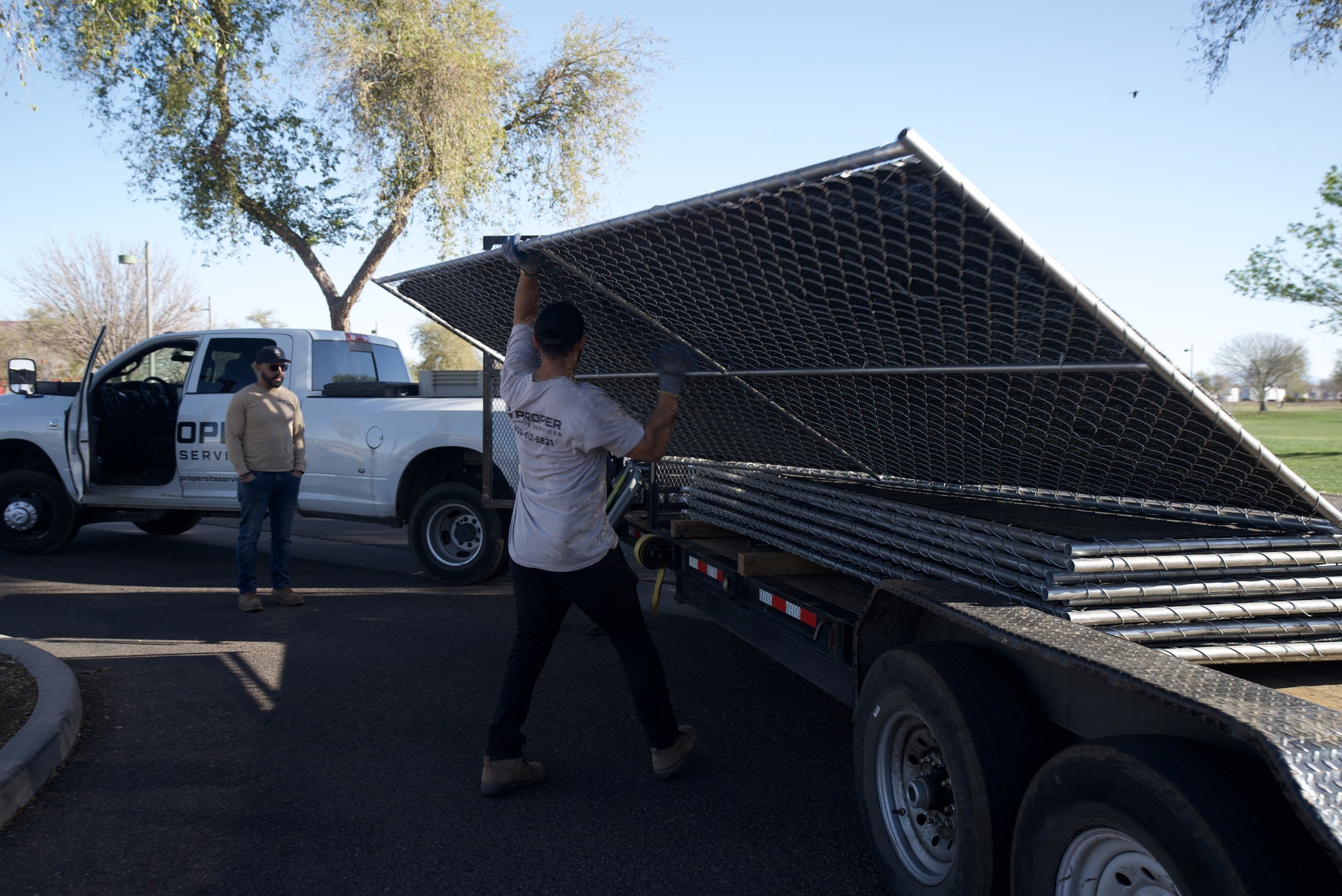
Temporary fencing typically comes in standard panel sizes, including:
- 6 feet tall
- 10–12 feet long per panel
When estimating your panel count, use the following formula:
Total linear feet ÷ panel length = number of panels
For Example:
100 linear feet ÷ 10-foot panels = 10 panels
How to Measure Your Site Step-By-Step
To get a more accurate measurement, here’s a simple, step-by-step process you can follow:
Step 1: Walk the Perimeter
Begin by outlining the area you want to fence off or secure.
Step 2: Measure Each Side
Use the following to measure each side:
- Measuring wheel
- Tape measure
- If necessary, digital tools (Google Maps works well for larger areas)
Step 3: Add All Sides Together
Adding all sides together will give you your total linear footage.
Step 4: Account for Access Points
Be sure to account for all of the following:
- Equipment entry
- Pedestrian gates
- Emergency access
These may force you to replace standard panels or make adjustments to your layout.
Other Factors That Can Affect Your Total
It’s important to remember that even with the best measurement(s), some real-word factors can impact how much fencing you need, including:
Terrain
In instances of uneven ground, you may require:
- Additional panels
- Adjustments for stability
Site Layout
Odd or irregular shapes typically require more precise measuring and some slight overages.
Security Requirements
Setups involving higher security may involve reinforced sections or tighter spacing.
Local Requirements
Some localities may have guidelines around fencing type, placement, or coverage.
When It’s Better to Have a Little Extra
In many cases, it’s better to get more temporary fencing than to come up short.
With a few extra panels, you can:
- Prevent gaps
- Save time during setup
- Improve overall and general site safety.
Common Mistakes to Avoid When Measuring
Before finalizing your fencing order, be sure to avoid these common pitfalls:
- Forgetting to account for gates or entry points
- Measuring only part of the site
- Ignoring slopes or obstacles
- Underestimating irregular layouts
These may be small details, but they can create big problems during setup if unaccounted for.
Don’t Be Afraid To Contact A Pro
If you have any reservations about your measurements, there’s no harm in getting a second set of eyes on it.
At Proper Site Services, we help customers:
- Evaluate site layouts
- Determine accurate fencing needs
- Plan for access, safety, and compliance
In addition to temporary fencing, we offer a wide variety of site solutions.
Get Help with Temporary Fencing for Your Site With Proper Site Services
Fencing is a detail that can easily be overlooked until it needs to be done right. But by focusing on linear footage, site layout and real-world conditions, you can avoid problems and keep your project running smoothly.
Here at Proper Site Services, we’re happy to help customers plan, measure, and install temporary fencing for events, projects and construction sites anywhere in the Valley and across Arizona.
Call (602) 612-8821 or request a free quote here today. We’ll help you get set up with the right solution the first time.