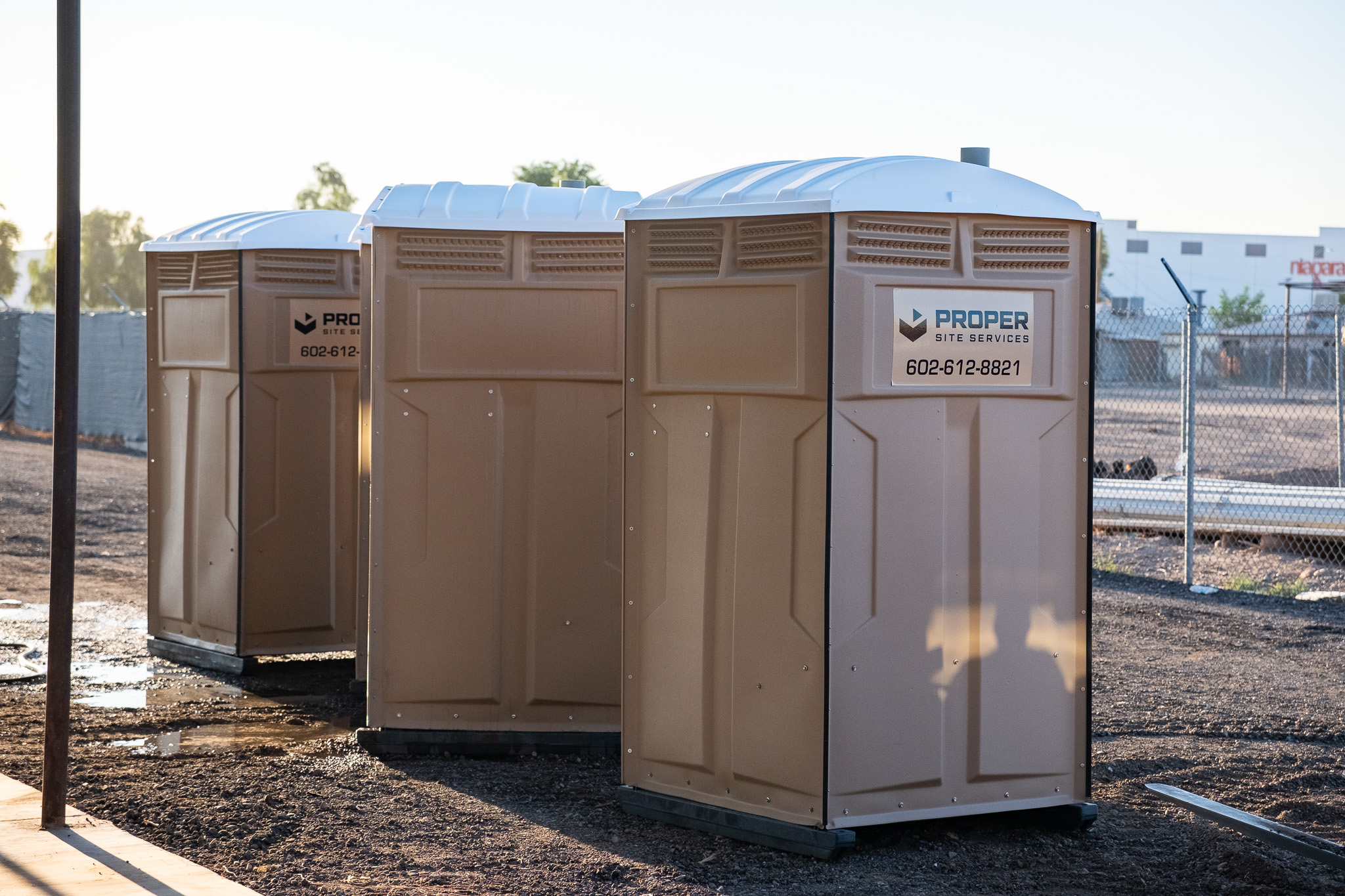
A standard portable restroom can cover basic sanitation needs, but it may not work for someone using a wheelchair or walker. ADA-compliant portable restrooms provide the entry, interior space, and features needed for accessible use. If you’re planning an Arizona event or arranging restrooms for a project, understanding the difference helps you choose the right units and a location where people can actually use them.
ADA-Compliant vs. Standard Portable Restrooms at a Glance
Both types provide a private restroom wherever permanent facilities aren’t available. The main difference is accessibility.
Feature | Standard portable restroom | ADA-compliant portable restroom |
Interior | Compact layout | Space for wheelchair maneuvering and transfer |
Entrance | Typically narrower, often with a raised threshold | Accessible doorway and threshold |
Grab bars | Generally not included | Required support bars beside and behind the toilet |
Toilet and supplies | Conventional layout | Accessible seat height and dispenser placement |
Placement | Needs stable ground and service access | Also needs an accessible route and entry clearance |
An accessible unit takes up more space, so include its footprint and approach area in your layout before delivery.
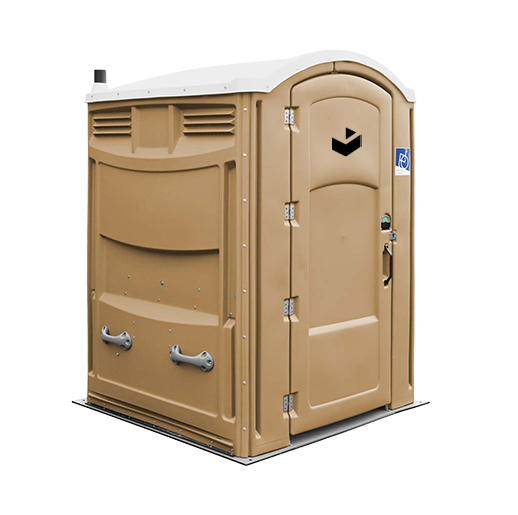
What Makes a Portable Restroom ADA-Compliant?
A larger enclosure alone doesn’t establish ADA compliance. Several features need to work together.
Room to maneuver: A wheelchair user needs space to enter, turn, close the door, and move into position beside the toilet.
Grab bars and transfer space: Properly positioned bars provide support, while clear space beside the toilet allows a person to transfer from a wheelchair.
Accessible fixtures: Toilet seat height and toilet paper placement matter. Supplies should be reachable without blocking the required clearances.
Usable entry: The doorway, threshold, door hardware, and approach must support accessible use.
When requesting portable toilet rentals, ask specifically for an ADA-compliant unit. Terms such as “oversized” or “wheelchair friendly” don’t, by themselves, confirm that every required feature is present.
When Do You Need Accessible Portable Restrooms?
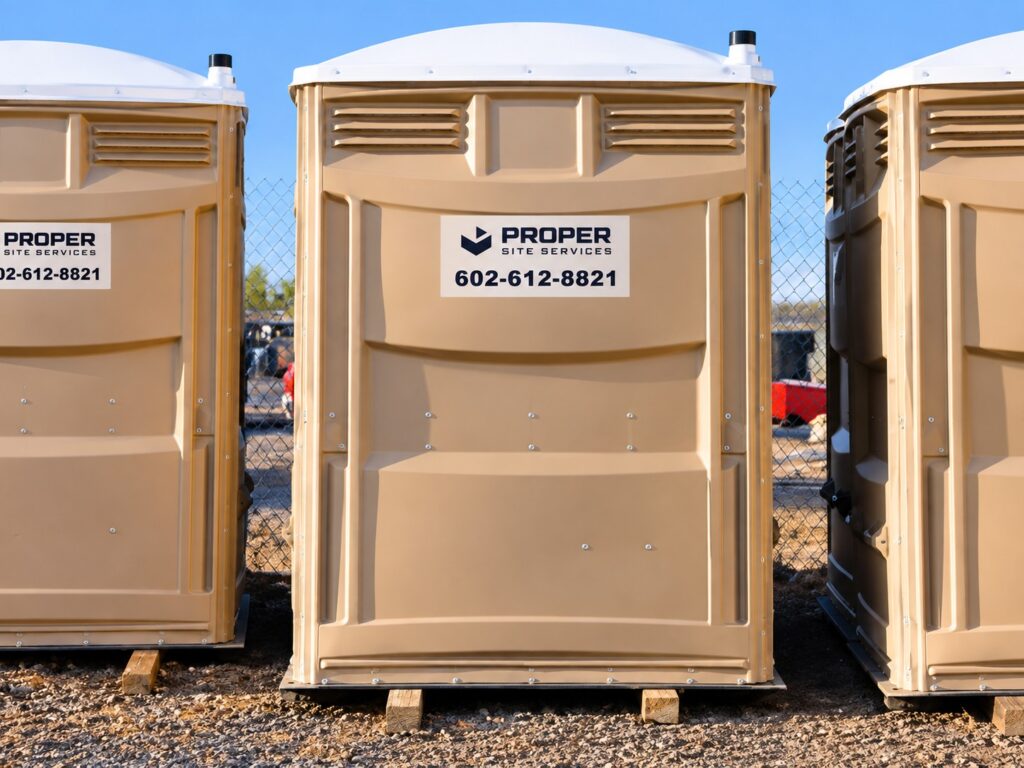
For public events covered by the ADA, accessible restroom planning belongs on the checklist from the start.
The U.S. Access Board explains that at least 5% of portable single-user toilets in each cluster must be accessible. Round fractional results up to a whole unit. For example, a cluster of 10 toilets needs at least one accessible unit, while a cluster of 30 needs at least two. Separate restroom clusters need to be evaluated separately.
Construction sites have an important exception. Portable toilets provided exclusively for construction personnel are exempt from these ADA Standards requirements. That doesn’t eliminate the need to consider worker accommodations, project specifications, or other applicable requirements.
Confirm the requirements for your event or project with the venue or responsible local authority before finalizing the order.
Placement Matters as Much as the Restroom
Picture an accessible restroom at an outdoor festival, sitting beyond a stretch of loose gravel. The unit may have the right interior, but getting to the door could still be difficult.
Plan an accessible route with a firm, stable, slip-resistant surface. Avoid steps, loose material, and obstacles that interrupt the path. Leave enough room to approach and operate the door.
For Arizona sites, check the route again after deliveries, landscaping changes, or storms. A clear path on setup day can become blocked by equipment, cables, muddy ground, or a relocated barricade.
Keep nearby handwashing facilities accessible, too. Restroom access and handwashing should be planned together.
Should You Rent a Mix of Standard and ADA Units?

A mix often makes sense. Standard units help meet overall demand, while ADA-compliant units provide accessible facilities where needed.
Start with attendance or crew size, hours of use, and rental duration. Then review the number of restroom locations and the accessible units needed at each one. Food, alcohol, and longer events can also affect overall restroom demand.
Our Porta Potty Calculator can help you start estimating quantities. Review those estimates alongside your accessibility requirements and site layout before booking.
Don’t base accessible restroom planning only on whether someone has requested a unit. Public event organizers may not know every guest’s access needs in advance.
What About Cleaning and Rental Costs?
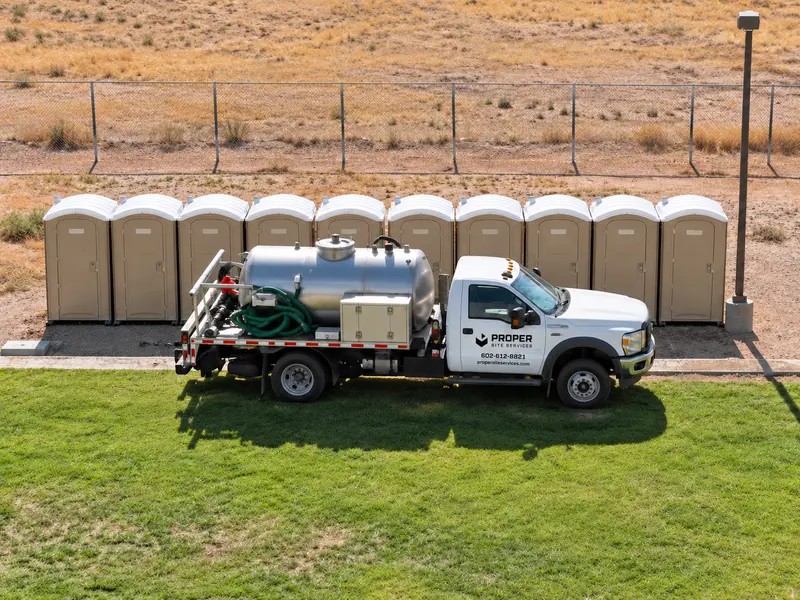
Both restroom types need pumping, cleaning, restocking, and inspection. An accessible unit also needs its maneuvering space and approach kept clear throughout the rental.
Ask for a quote that separates the unit types and explains delivery, pickup, and servicing. Pricing depends on the equipment, location, rental length, and service schedule. Comparing complete quotes helps you plan the budget without overlooking maintenance.
Frequently Asked Questions
What is the main difference between ADA-compliant and standard portable restrooms?
ADA-compliant portable restrooms provide accessible entry, wheelchair maneuvering space, grab bars, and accessible fixture placement. Standard units have a more compact layout and generally don’t offer these features.
Is a larger portable restroom automatically ADA-compliant?
No. Size alone doesn’t establish compliance. The doorway, interior clearances, grab bars, toilet seat height, and other features must meet applicable accessibility standards.
How many ADA-compliant portable restrooms do I need for an event?
For events covered by the ADA, at least 5% of the portable toilets in each cluster must be accessible, with fractional results rounded up. A cluster of 10 toilets needs at least one accessible unit, while a cluster of 30 needs at least two. Confirm your event’s requirements before booking.
Are ADA-compliant portable restrooms required on every construction site?
Portable toilets used exclusively by construction personnel are exempt from these ADA Standards requirements. Worker accommodations, project specifications, and other applicable requirements still need to be considered.
Where should an ADA-compliant portable restroom be placed?
Place it on firm, stable ground connected to an accessible route with a slip-resistant surface. Keep the approach and doorway clear of steps, loose gravel, cables, equipment, and other obstacles.
Can I rent standard and ADA-compliant portable restrooms together?
Yes. A combination can meet overall restroom demand while providing accessible facilities. Plan the quantities around attendance, duration, restroom locations, and applicable accessibility requirements.
Does Proper Site Services offer ADA-compliant portable restroom rentals?
Yes. Proper Site Services offers standard and ADA-compliant portable restrooms in the greater Phoenix metropolitan area. Call (602) 612-8821 to discuss quantities, placement, delivery, and servicing for your event or project.